The Calendar on the Wall

The Calendar on the Wall

The Calendar on the Wall

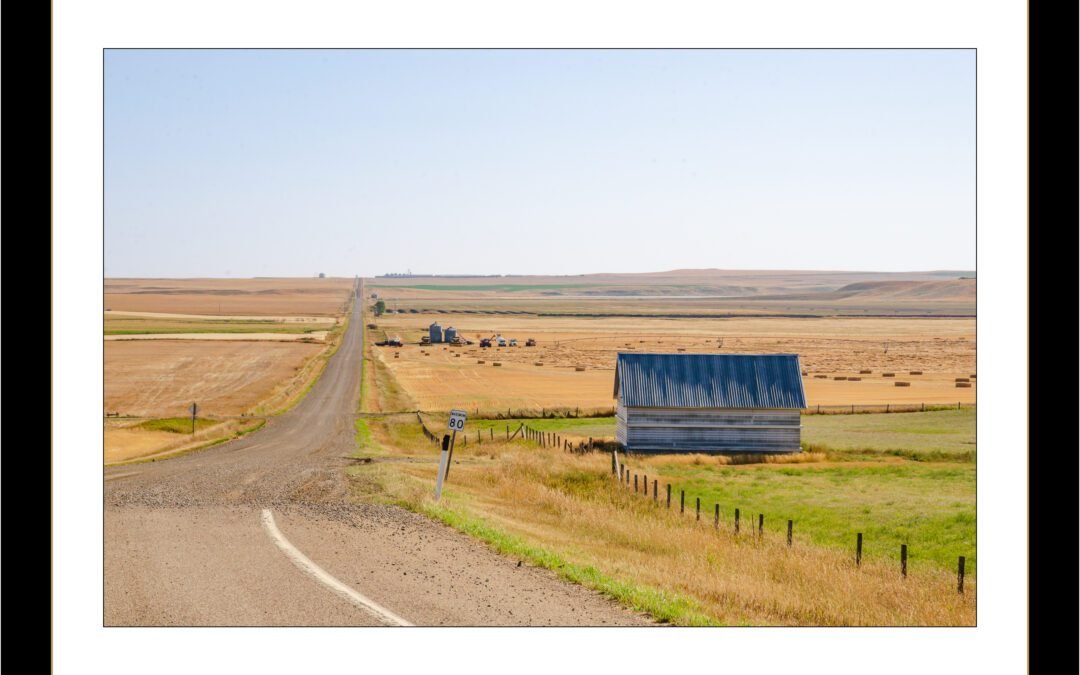
On September 21, 2020, I stopped at the corner of Highway 4 and 506, just north of Warner, Alberta, and looked east. The scene before me — a simple stretch of prairie, the kind you might drive past without much notice — carried more weight than most. I had stood here before in memory, not in person.

Back in the early 1960s, this very view appeared on an Alberta Wheat Pool calendar, either 1963 or 1964. I remember it clearly from my Grade 3–4 classroom in Masinasin, where Miss Miller pointed at the picture and told us proudly it was from our area. At the time, I had no way of knowing I would one day find myself standing in the same spot with a camera in hand, reconnecting with that fragment of my childhood.

The tie runs deeper than memory. My great-grandparents’ farm was at the first intersection east of here, and my mother spent summers there as a child. She would ride the Greyhound bus down from Lethbridge, getting dropped off right at the 506/4 junction. What was for her a gateway to summer on the farm later became, for me, a link between family history and the shared cultural memory of Alberta’s farming past.

The Alberta Wheat Pool calendars were once staples in prairie homes — free, practical, and filled with images of the land that shaped life across the West. They were more than decoration; they were markers of identity, showing the landscapes farmers knew by heart. Seeing this scene again in 2020, decades after first encountering it on a classroom wall, felt like collapsing time — past and present stitched together by prairie light.

Sometimes a photograph is just a record of a place. Other times, like this, it’s also a bridge between memory, heritage, and the stories we carry forward.


See this image and more in my ongoing Photo of the Day series at www.djtphotoart.ca

Sidebar: The Alberta Wheat Pool Calendar

For decades, the Alberta Wheat Pool calendar was a fixture in prairie homes, schools, and farm offices. Each year, the cooperative printed thousands of wall calendars featuring photographs of Alberta landscapes, elevators, and farms — often scenes recognizable to the very people who hung them.

The calendars weren’t just about keeping track of seeding, harvest, or community events. They were a way of reinforcing identity: farmers saw their land, their towns, and their lives reflected back at them. The Wheat Pool, as a farmer-owned cooperative, used these calendars to stay present in everyday life — quietly reminding members that they were part of something bigger than themselves.

For children in small-town schools, the pictures were sometimes their first taste of seeing their own communities “published.” And for adults, they became part of the rhythm of the year — flipped page by page, season by season, until another arrived in the mailbox.

Today, those old calendars have become nostalgic keepsakes, offering not just beautiful photographs but also a glimpse into the cooperative spirit that once defined prairie farming.
Warner-Elevators

Warner-Elevators

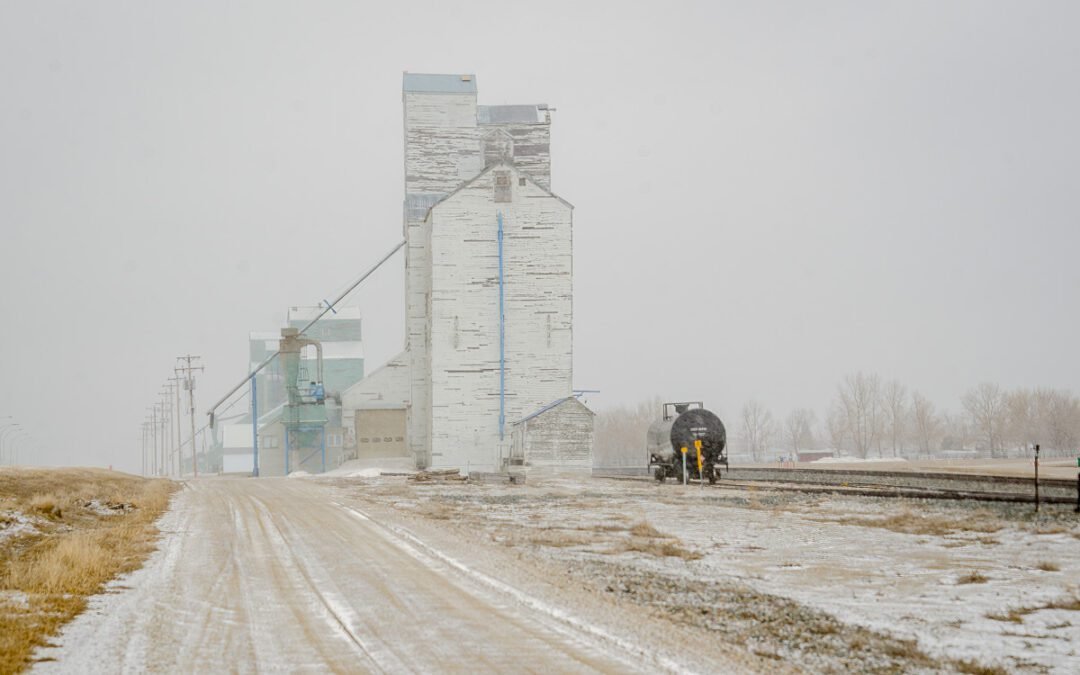
Historic wooden grain elevators in Warner, Alberta, disappear into a late spring snowstorm. A gravel road leads toward the vanishing structures, while an abandoned rail tanker car rests on the tracks, adding to the scene’s eerie atmosphere.

Warner Alberta’s Historic Grain Elevators: A Vanishing Prairie Icon in a Spring Snowstorm

The prairies hold stories of resilience, industry, and the passage of time. Nowhere is this more evident than in Warner, Alberta, where the last remaining wooden grain elevators stand as silent sentinels of a bygone era. My latest fine art photograph captures this historic scene during a late spring snowstorm—an image that speaks to both the endurance and fragility of the Canadian prairie landscape.

The Story Behind the Image

Snowstorms in late spring are not uncommon in Alberta, but they bring with them an eerie beauty. In this scene, Warner’s grain elevator row disappears into the storm, its towering structures fading into the whiteout. A gravel road leads the eye past these monolithic wooden elevators, once the lifeblood of the region’s agricultural economy. A lone rail tanker car sits on the tracks in the foreground, a quiet reminder of how transportation and trade once centered around these structures.

A Legacy of the Land: The History of Warner’s Grain Elevators

Warner, Alberta, once boasted at least seven wooden-cribbed grain elevators, built between 1913 and 1960 along the Canadian Pacific Railway line. These towering structures played a vital role in Alberta’s grain industry, serving farmers who relied on them to store and ship their harvests. Today, only four remain, standing as one of the last intact elevator rows in the province.

Key Moments in Warner’s Grain Elevator History:

  • 1913: The first elevator in the current row was built by the Alberta Farmers’ Co-operative Elevator Company.
  • 1939: The Ellison Milling & Elevator Company constructed one of the most historically significant elevators, maintaining much of its original design.
  • 1960s – Present: Many of the original elevators were demolished as the grain industry shifted towards centralized inland concrete terminals.
  • Today: The surviving elevators primarily handle mustard crops and serve as a rare reminder of Alberta’s agricultural heritage.

These grain elevators are more than just relics; they are cultural landmarks. Their gradual disappearance mirrors the transformation of farming and trade in Western Canada, making images like this a crucial part of preserving their history.

Why This Photograph Matters

As an artist, my mission is to capture the beauty of fleeting moments—those that define both place and time. This image of Warner’s grain elevators disappearing into a snowstorm is a testament to the delicate balance between nature and history. It is a tribute to the communities that built and relied on these structures, as well as a reminder of how quickly the familiar can fade away.

Limited Edition Prints Available

This fine art print is available in sizes ranging from 4×6 to 40×60 inches. Every piece is meticulously crafted in my studio using the latest archival inks and museum-quality paper, ensuring a lifespan of up to 200 years. Whether unframed, mounted with a 2-inch matte, or custom-framed, each print is a lasting investment in artistry and history.


Preserve a piece of Alberta’s history. Own a fine art print that tells the story of Warner’s vanishing grain elevators before they disappear forever.